
Many people have undertaken to determine God’s set times and events with the result being much confusion and error. However these efforts were developed with an agenda being present to force the word of God into a definitive timeline that was favorable to the researcher. Whenever we try and force God’s prophetic timeline into our desired timeline then we are in error and confusion results. The only way to truly know God’s timeline is to let the holy scriptures speak and corroborate themselves by themselves using God’s own given dates and events.
Please review the following bible study which was originally given by Dewey Bruton in 2005 and see if this timeline makes sense to you and your faith:
Obama Visits the Temple?
In related news what happened on precisely March 22nd, 2013, astoundingly, on Nissan the 10th on the Israeli Calendar:
Daniel Ch 12 Outlined Below
The “time of the end” in the Book of Daniel refers to the final prophetic period at the close of human history (often called the eschatological “end times” or “last days”), marked by intense global trouble, the unsealing of Daniel’s prophecies, increased knowledge and travel (“many shall run to and fro, and knowledge shall be increased”), purification of the righteous, and ultimate deliverance and resurrection of God’s people.
It appears in several key verses (all quotes from the King James Version):
- Daniel 8:17: “…Understand, O son of man: for at the time of the end shall be the vision.”
- Daniel 11:35: “…even to the time of the end: because it is yet for a time appointed.”
- Daniel 11:40: “And at the time of the end shall the king of the south push at him: and the king of the north shall come against him like a whirlwind…”
- Daniel 12:4: “But thou, O Daniel, shut up the words, and seal the book, even to the time of the end: many shall run to and fro, and knowledge shall be increased.”
- Daniel 12:9: “…Go thy way, Daniel: for the words are closed up and sealed till the time of the end.”
This period culminates in the events of Daniel 12:1-3:
The prophecies in Daniel were to remain partially sealed until this era.
The 1290 Days Following the End of the Daily SacrificeThe “daily sacrifice” (Hebrew tamid, often translated as the “continual” or “regular” burnt offering—two lambs offered daily in the temple, per Numbers 28:1-8) is taken away in connection with the “abomination that maketh desolate” (a blasphemous desecration of the sanctuary). This is described in:
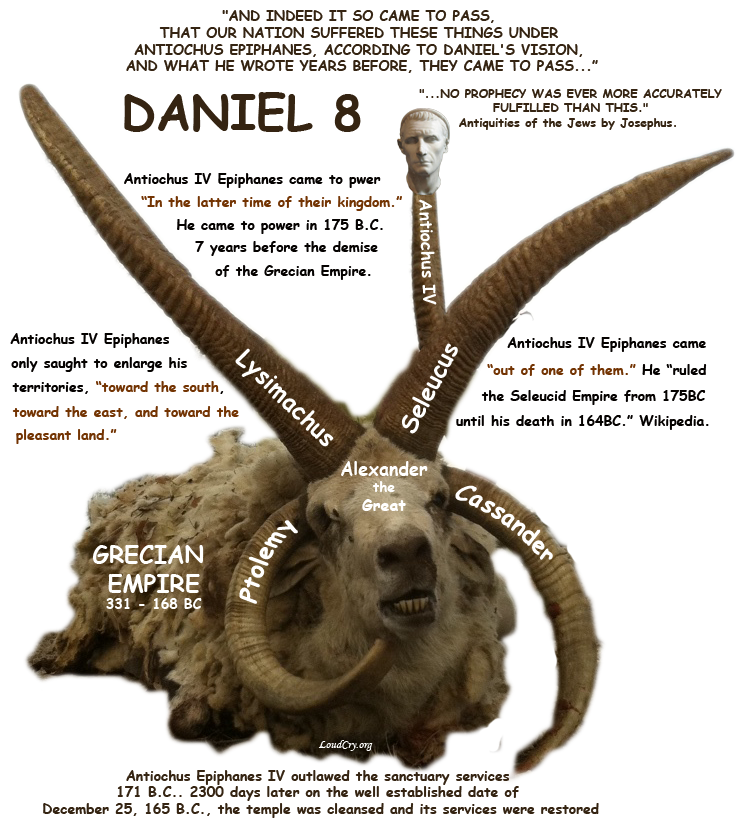
- Daniel 8:11: “…and by him the daily sacrifice was taken away, and the place of his sanctuary was cast down.”
- Daniel 11:31: “…and they shall take away the daily sacrifice, and they shall place the abomination that maketh desolate.”
- Daniel 12:11: “And from the time that the daily sacrifice shall be taken away, and the abomination that maketh desolate set up, there shall be a thousand two hundred and ninety days.”
The Bible does not explicitly state what specific event occurs at the exact end of these 1290 days. It simply defines this as the length of the period that begins when the daily sacrifice ceases and the abomination is set up. The very next verse adds:
A related timeframe appears in Daniel 12:7 (“a time, times, and an half”—commonly understood as 3½ years or 1260 days), after which “all these things shall be finished.” The 1290 days thus extends 30 days beyond that in many readings.
Common Interpretations Across Christian TraditionsInterpretations of the exact timing, nature (literal days vs. symbolic “year-day” principle), and events vary widely and have been debated for centuries. Here are the main perspectives (presented neutrally, without endorsement):
- Futurist (premillennial/dispensational view): These are literal days in a future 7-year tribulation period. The daily sacrifice resumes in a rebuilt Jewish temple; its removal + the abomination (often linked to the Antichrist’s actions, per Matthew 24:15 and 2 Thessalonians 2:3-4) starts the final 3½-year “great tribulation.” The 1290 days likely ends shortly after Christ’s return (post-Armageddon), perhaps allowing time for Israel’s restoration or cleanup. The extra 45 days to 1335 bring the blessing of entering the millennial kingdom and the judgment of the nations (Matthew 25:31-46). The “time of the end” is thus the culmination of these events leading to the second coming.
- Historicist view (common in Reformation-era and some Adventist interpretations): The numbers are prophetic “days” representing years. The “daily” may symbolize paganism or the continual ministry of Christ, removed centuries ago (e.g., by papal power or other historical forces). The 1290/1335 years point to long-term historical fulfillments ending in the modern era or future close of probation, with the “time of the end” beginning in the late 18th/19th century (increased knowledge/travel as a sign).
- Preterist view: Largely fulfilled in the past. The daily sacrifice and abomination refer to the 2nd-century BC actions of Antiochus IV Epiphanes (who desecrated the temple) or the 1st-century AD Roman destruction of the Jerusalem temple in AD 70. The 1290 days (or years) were historical, and the “time of the end” was the end of the Jewish age or the establishment of the church age.
The text itself emphasizes endurance, wisdom, and trust in God’s sovereignty rather than pinpointing a single “event” on day 1290. Daniel is told to “go thy way till the end be” (12:13), with the full understanding reserved for “the wise” in the time of the end.
These prophecies are interconnected with similar imagery in Revelation (e.g., 1260 days, abomination). For deeper study, reading the full context of Daniel 8, 11, and 12 together is recommended, along with cross-references in the New Testament. Different denominations and scholars reach varying conclusions based on their interpretive framework.
Yes, the passage in Daniel 12:11 can be blended with the events of the Roman destruction of the Second Temple in 70 AD under a preterist interpretive framework (which sees many of Daniel’s prophecies as fulfilled in the first century, particularly the fall of Jerusalem as the “time of the end” of the old covenant/Jewish age). In this view, the prophecy describes the final phase of the Jewish-Roman War (66–73/74 AD), culminating in the siege, the end of the Temple’s sacrificial system, and the desolation of Jerusalem—events Jesus Himself linked to Daniel’s “abomination of desolation” (Matthew 24:15; Luke 21:20).
Here is the key verse again (KJV) for context:
Did the Daily Sacrifice Stop on a Certain Day in 70 AD?Yes—on the 17th of Tammuz (Panemus in the Macedonian/Julian calendar), corresponding to approximately July 14–17, 70 AD. Flavius Josephus (the primary eyewitness historian) records this explicitly in The Jewish War (Book 6.93–94): On that day, during the height of the Roman siege under Titus, the Tamid (continual daily burnt offering of two lambs) ceased entirely “for want of men to offer it” (or lambs, due to the famine inside the city). The priests and people were “grievously troubled” because the perpetual worship of God in the Temple had halted. This is corroborated by the Mishnah (Ta’anit 4:6), which lists the cessation of the Tamid on the 17th of Tammuz as one of five national calamities (linked to both the First and Second Temples).
- This occurred during the final Roman assault on the Temple Mount (the siege had begun in April 70 AD around Passover).
- The Romans had already breached the outer courts; the inner sanctuary was still standing but starving.
- About three weeks later, the Temple itself was burned (Josephus dates this to the 10th of Av, late August 70 AD—traditionally associated with Tisha B’Av). A Roman soldier threw a torch into the chambers against Titus’s orders, and the fire consumed the building. The city fully fell by early September 70 AD.
In the preterist blending:
- The “daily sacrifice taken away” = the final cessation of the Tamid on 17 Tammuz 70 AD (or, in some readings, the earlier 66 AD stoppage of sacrifices offered for the Roman emperor, which was the spark of open revolt).
- The “abomination that maketh desolate set up” = the Roman legions (with their idolatrous standards/eagles) surrounding and then entering the holy precincts—precisely what Jesus warned would signal flight from Judea (Luke 21:20). The Romans’ presence, desecration, and eventual burning of the Temple fulfilled the “desolation.”
This marked the irreversible end of the Temple-based sacrificial system and the old covenant order (echoing Daniel 8:11, 11:31, and 9:27). Judaism shifted permanently toward rabbinic/synagogue-based practice.
What Historical Event Occurred Exactly 1290 Days Later (If Any)?The Bible itself does not name a specific “event” on day 1290—it simply defines the length of the period that begins when both the sacrifice ceases and the abomination is set up. Historical correlations are therefore interpretive, and preterist scholars differ on the exact starting point:
- Most common preterist alignment (from ~66 AD): Many place the start earlier—at the winter of 66 AD (or late 66/early 67), when Eleazar ben Hanania halted the daily sacrifices offered on behalf of Caesar and Rome (an act of rebellion that Josephus says ignited the war). From that point, roughly 1,290 days (about 3½ years) brings us to the Roman army’s final encirclement and assault preparations outside Jerusalem in spring 70 AD—the “abomination” visibly set up. This fits the broader 3½-year “time, times, and half a time” motif in Daniel 7:25, 12:7, and Revelation. The 1,290 days thus span the war’s climax, ending around the Temple’s desolation.
- From the July 70 AD cessation (17 Tammuz): Adding exactly 1,290 days lands in late January 74 AD (using approximate Julian/Gregorian conversion). No single major recorded event is universally cited on that precise day. The Jewish revolt’s final chapter—the siege and mass suicide at Masada—occurred in spring 73 AD or early 74 AD (traditional date ~April 15, 73 AD, though some scholars argue early 74). This was the last pocket of resistance; its fall effectively ended organized Jewish armed revolt against Rome. While not an exact day-match, some see the broader 73–74 AD close of the war as the extended “end” of the desolation period.
A related 1,335-day blessing (Daniel 12:12) is sometimes linked by preterists to the full surrender of Jerusalem (around early September 70 AD) or a short extension allowing for escape/clemency. Again, these are approximate calendar correlations using 30-day prophetic months or historical adjustments; exact day-counts depend on the starting trigger chosen.In summary (preterist blending): The 70 AD events are seen as the dramatic historical outworking of Daniel 12:11—the daily Tamid stopping amid siege, the Roman “abomination” desecrating the holy place, and the 1,290 days encompassing the war’s final horrors and the old covenant’s close. The “time of the end” (Daniel 12:4, 9) was not the end of the world, but the end of the Temple age, after which “knowledge” increased and the gospel spread (as the church emerged). Not all Christians interpret Daniel this way—futurists see a future tribulation, historicists a long symbolic timeline—but this is how many preterists directly connect the prophecy to the Roman armies’ actions in 70 AD. Josephus’s eyewitness account provides the historical anchor.